If you’re in your late 30s, 40s, or beyond, working out at home can feel both practical and overwhelming.
You might want:
- Strength without joint strain
- Cardio without burnout
- Flexibility without complicated routines
- Results without extreme programs
The good news is that the best home workouts for midlife women are often simple, low-maintenance, and adaptable.
You don’t need expensive equipment, long sessions, or daily intensity.
You need movement that fits your life and supports your body as it changes.
This guide walks you through realistic home workout options that build strength, energy, and consistency — without pressure.
Why Home Workouts Work Well in Midlife
By midlife, many women are balancing:
- Work responsibilities
- Family commitments
- Caregiving roles
- Increased mental load
Getting to a gym regularly may feel unrealistic.
Home workouts offer:
- Flexibility
- Privacy
- Reduced time barriers
- Easier consistency
When exercise is accessible, it’s easier to maintain long-term.
What Changes After 35 (And Why It Matters)
Your body may respond differently to exercise now compared to your 20s.
You may notice:
- Slower recovery
- Increased joint sensitivity
- More variable energy
- Greater impact from stress
The best home workouts for midlife women support strength and cardiovascular health while allowing recovery.
Intensity can still have a place – but sustainability matters more.
Category 1: Bodyweight Strength Training
One of the most effective home workouts requires no equipment at all.
Bodyweight strength training supports:
- Muscle maintenance
- Joint stability
- Balance
- Functional strength
Key Movement Patterns to Include
Instead of memorising long routines, focus on patterns.
1. Squat Pattern
Helps with sitting, standing, and stair climbing.
Examples:
- Chair squats
- Bodyweight squats
- Slow controlled sit-to-stand
2. Hinge Pattern
Supports glutes and lower back.
Examples:
- Hip hinge movements
- Glute bridges
- Controlled deadlift-style movements
3. Push Pattern
Strengthens chest and shoulders.
Examples:
- Wall push-ups
- Incline push-ups
- Floor push-ups (if comfortable)
4. Pull Pattern
Supports posture and upper back.
Examples:
- Resistance band rows
- Light dumbbell rows
5. Core Stability
Builds deep abdominal strength.
Examples:
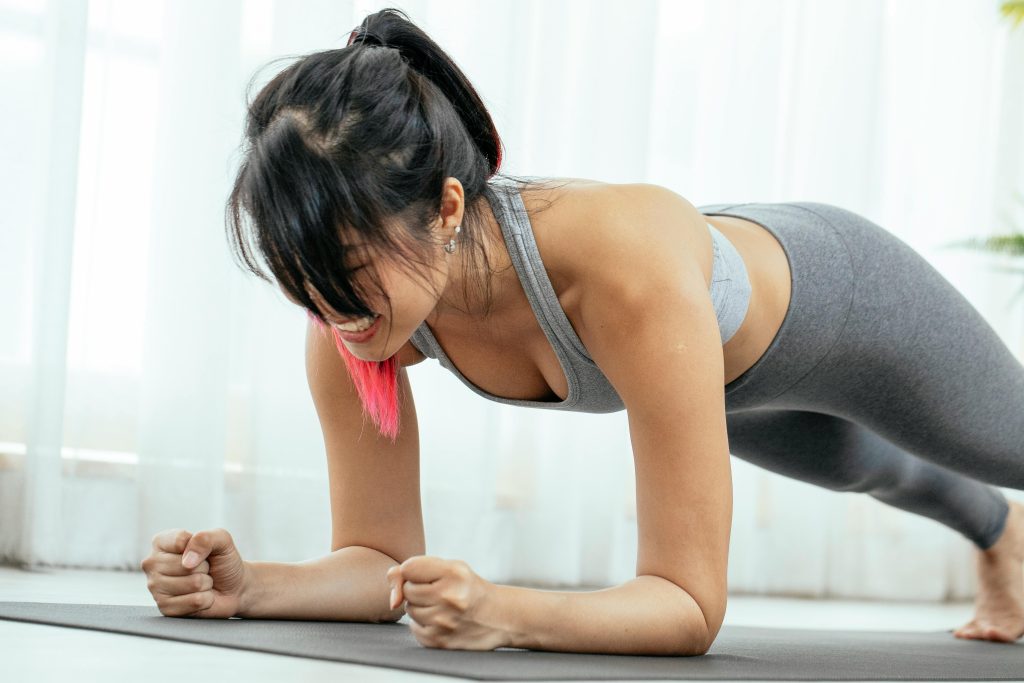
- Plank variations
- Dead bug movements
- Bird-dog exercises
You don’t need all of these every session.
Rotating through them weekly is enough.
Category 2: Walking Workouts at Home
Walking remains one of the best home workouts for midlife women – even if it’s around your neighbourhood.
Walking supports:
- Cardiovascular health
- Stress reduction
- Recovery
- Daily energy
Ways to Make Walking More Effective
You might:
- Add short bursts of faster walking
- Use light hand weights occasionally
- Walk with hills
- Listen to a motivating podcast
Walking doesn’t need to be intense to be valuable.
Category 3: Pilates and Core-Focused Work
Pilates-style workouts are popular for a reason.
They support:
- Core control
- Posture
- Joint-friendly strength
- Mind-body connection
For women experiencing stiffness or stress, Pilates at home can feel restorative and strengthening at the same time.
Even 20 minutes can make a difference.
Category 4: Low-Impact Cardio at Home
High-impact workouts aren’t required for results.
Low-impact cardio options include:
- Step routines using stairs
- Dance-based movement
- Marching or stepping intervals
- Light aerobic circuits
These elevate your heart rate without excessive joint strain.
Category 5: Resistance Training with Minimal Equipment
If you’re ready to add load, you can do so simply.
Basic equipment might include:
- Dumbbells
- Resistance bands
- Kettlebells
Resistance training can support:
- Muscle maintenance
- Bone health
- Metabolic support
Start light and increase gradually based on comfort and recovery.
Creating a Balanced Weekly Home Workout Plan
The best home workouts for midlife women are balanced across strength, cardio, and recovery.
Here’s a simple example:
- Monday: Bodyweight strength
- Tuesday: Walking
- Wednesday: Pilates or mobility
- Thursday: Strength with light weights
- Friday: Walking or low-impact cardio
- Weekend: Rest or gentle movement
This structure is flexible.
Adjust frequency and intensity based on your energy.
How Long Should Home Workouts Be?
Many women assume workouts must be long to count.
In reality:
- 20–30 minutes can be effective
- Even 10 minutes supports consistency
- Short sessions are easier to repeat
Consistency matters more than duration.
Listening to Your Body During Home Workouts
Midlife fitness works best when you pay attention to feedback.
You might notice:
- Some days feel strong
- Some days require lighter effort
- Recovery needs vary week to week
Adjust without guilt.
Pushing through exhaustion rarely improves long-term consistency.
Making Home Workouts Sustainable
Sustainability depends on simplicity.
To stay consistent:
- Keep equipment accessible
- Limit the number of routines
- Schedule sessions loosely rather than rigidly
- Allow flexibility
Perfection is not required for progress.
Common Mistakes to Avoid
1. Doing Too Much Too Soon
Starting with daily high-intensity workouts often leads to burnout.
2. Ignoring Recovery
Rest days are part of training, not breaks from it.
3. Comparing Yourself to Your Younger Self
Your current body deserves a different strategy.
4. Switching Programs Constantly
Repeating basic routines builds more strength than constantly chasing novelty.
Stress and Home Workouts
Stress affects:
- Energy
- Motivation
- Recovery
During stressful periods:
- Shorten sessions
- Focus on walking or mobility
- Reduce intensity
Movement should support your nervous system, not overload it.
Hormones and Midlife Fitness
Hormonal shifts may influence:
- Energy patterns
- Recovery speed
- Joint comfort
Some weeks may feel stronger than others.
Flexibility within your home workout routine supports long-term consistency.
How to Stay Motivated at Home
Motivation often improves when:
- Workouts are short
- You track progress simply
- You celebrate small wins
- You focus on how you feel afterward
You might:
- Mark sessions on a calendar
- Keep a strength log
- Take note of improved endurance
Small progress builds confidence.
When to Progress Your Home Workouts
If workouts feel consistently easy, you might:
- Add light resistance
- Increase repetitions slightly
- Slow down movements
- Extend sessions by 5–10 minutes
Progress should feel challenging but manageable.
The Role of Recovery at Home
Recovery tools available at home include:
- Stretching
- Gentle yoga
- Walking
- Adequate sleep
- Stress reduction practices
Supporting recovery helps you maintain momentum.
You Don’t Need Fancy Equipment
Marketing often suggests you need:
- Large machines
- Studio memberships
- Complex programs
In reality, the best home workouts for midlife women often use:
- Bodyweight
- Basic dumbbells
- A mat
- Comfortable shoes
Simplicity increases longevity.
A Gentle Reality Check
Home workouts may not:
- Feel glamorous
- Deliver instant results
- Replace every gym experience
But they can:
- Support long-term health
- Improve strength
- Build confidence
- Fit into real life
And that matters.
A Reassuring, Empowering Conclusion
The best home workouts for midlife women are not the most intense or trendy.
They are:
- Consistent
- Adaptable
- Joint-friendly
- Supportive of recovery
- Realistic for busy lives
You don’t need dramatic transformation plans.
You need movement that works in your living room, your schedule, and your current body.
Start small.
Stay consistent.
Adjust as needed.
Over time, those steady, simple sessions build strength and resilience — not just physically, but mentally as well.
And that’s what makes them truly effective.