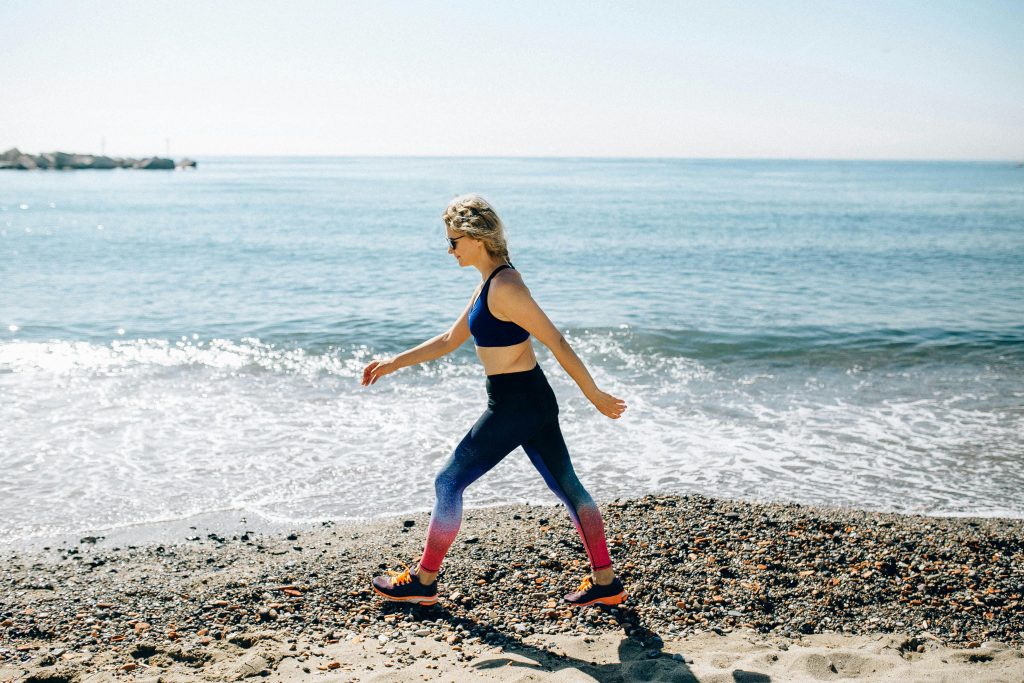
Walking is often overlooked in the fitness world, especially once you pass 35.
It can seem too simple to “count,” especially when surrounded by messages that prioritise intensity, sweat, and exhaustion.
Yet for many women, walking workouts for women over 35 are one of the most effective, sustainable ways to support fitness, energy, and overall wellbeing.
Walking is adaptable, low-impact, and easy to return to – even during busy or stressful seasons of life.
This article explores why walking workouts work, how to make them more effective without turning them into punishment, and how to build a walking routine that actually fits your life.
Why walking deserves more respect after 35
As your body changes, so do its needs.
After 35, many women notice that recovery takes longer and tolerance for constant high-impact exercise decreases.
Walking supports your body by:
- Being gentle on joints
- Allowing frequent movement
- Supporting consistency without burnout
- Fitting into daily life more easily than structured workouts
Walking workouts for women over 35 work because they respect your body rather than trying to overpower it.
Walking is not “less than” other workouts
One of the biggest barriers to embracing walking is mindset.
Many women worry that walking isn’t “enough” to make a difference.
In reality, walking can:
- Support cardiovascular fitness
- Improve stamina for daily tasks
- Encourage regular movement
- Reduce long periods of inactivity
A workout that you actually do regularly is far more effective than an intense routine that’s hard to maintain.
What makes a walk a “workout”?
A walking workout doesn’t require special equipment or complicated plans.
It simply involves walking with a bit more intention than casual movement.
That intention might look like:
- Walking at a pace that feels purposeful
- Choosing varied terrain
- Walking for a set amount of time
- Paying attention to posture and breathing
Even small changes can turn a walk into a meaningful workout.
Why walking suits women over 35 particularly well
Low impact, high consistency
As joints, tendons, and connective tissue become more sensitive with age, lower-impact movement becomes more valuable.
Walking:
- Reduces pounding on the body
- Is easier to recover from
- Can be done more frequently
This consistency is one reason walking workouts for women over 35 are so effective long term.
Easy to adjust as your energy changes
Some days you may feel energised.
Other days, you may feel flat or overwhelmed.
Walking allows you to:
- Slow down when needed
- Pick up the pace when energy allows
- Shorten or lengthen sessions easily
This flexibility helps you keep moving even when life isn’t ideal.
Different types of walking workouts
Walking workouts don’t all look the same.
Variety can keep walking engaging and supportive.
Brisk walking
Brisk walking involves walking fast enough that:
- Your breathing deepens
- You feel warm
- Conversation requires a little effort
It doesn’t need to feel exhausting.
Short bursts of brisk walking can be effective even during shorter sessions.
Hill or incline walking
Adding hills or inclines:
- Challenges the legs more
- Increases effort without impact
- Can make shorter walks feel more demanding
This can be done outdoors or on a treadmill, depending on preference.
Interval-style walking
Interval walking alternates between:
- Faster-paced walking
- Slower recovery walking
For example:
- Walk briskly for a few minutes
- Slow down for a minute
- Repeat
This approach adds variety without turning walking into a high-stress workout.
Longer, steady walks
Longer walks at a comfortable pace:
- Support endurance
- Encourage mental clarity
- Often feel restorative rather than draining
These walks can be especially helpful during high-stress periods.
Social walking
Walking with a friend or group:
- Adds accountability
- Makes time pass quickly
- Supports mental wellbeing
Social walking workouts for women over 35 often feel more sustainable than solo routines.
How often walking workouts can fit into your week
Walking is one of the few workouts that many women can do most days without negative effects.
That doesn’t mean you must walk daily.
It simply means walking offers flexibility.
You might:
- Walk most days in shorter sessions
- Combine longer walks with shorter ones
- Use walking as recovery between other workouts
There is no single “correct” frequency.
Walking and strength: how they work together
Walking supports lower-body strength naturally.
Over time, it engages:
- Glutes
- Quadriceps
- Hamstrings
- Calves
Adding hills, varied terrain, or intentional posture can increase this effect.
Some women pair walking with separate strength workouts, while others rely on walking as their primary movement. Both approaches can be valid.
Walking for weight changes and body composition
Many women explore walking workouts for women over 35 because they want gentle support for weight management.
Walking may:
- Increase overall daily movement
- Support consistency without burnout
- Feel easier to maintain long term
For some women, walking becomes a foundation that supports other habits, such as better sleep and regular meals – which can indirectly influence body composition.
Walking and stress management
Walking is one of the most accessible ways to support stress regulation.
It can:
- Provide mental space
- Reduce feelings of overwhelm
- Create a sense of routine
Even short walks can offer emotional relief during demanding days.
Making walking workouts more engaging
If walking feels boring, small adjustments can help.
You might:
- Explore new routes
- Walk at different times of day
- Listen to music, podcasts, or audiobooks
- Focus on posture and breathing
Walking doesn’t need to feel monotonous to be effective.
Posture and awareness during walking
Walking workouts for women over 35 can feel better with a little awareness.
You might gently check in with:
- Upright posture
- Relaxed shoulders
- Natural arm swing
- Comfortable stride
This isn’t about perfection – just occasional awareness.
Walking indoors vs outdoors
Both options have benefits.
Outdoor walking:
- Provides fresh air and variety
- Can support mood and motivation
Indoor walking:
- Offers weather consistency
- Allows controlled pacing
- Can feel safer or more convenient
Choose what works best for your environment and preferences.
Walking when energy is low
On low-energy days, walking can still be valuable.
You might:
- Walk more slowly
- Shorten the session
- Focus on gentle movement
Movement doesn’t have to be intense to be supportive.
Walking during busy seasons of life
For women over 35, life is often full.
Walking works well because it can:
- Fit into lunch breaks
- Be done before or after work
- Replace short car trips
- Combine with social time
Walking workouts often succeed where rigid plans fail.
Common myths about walking workouts
“Walking isn’t real exercise”
Walking is a form of physical activity that engages multiple systems in the body.
Its simplicity doesn’t reduce its value.
“You need to walk for hours”
Even shorter walks can be meaningful when done consistently.
“Walking won’t make a difference after 35”
Many women find that walking becomes more effective as their bodies respond better to gentler, repeatable movement.
Listening to your body matters most
Two women can follow the same walking routine and have very different experiences.
Your ideal walking workouts depend on:
- Your current fitness level
- Joint comfort
- Stress and sleep quality
- What you enjoy
The most effective walking plan is the one you can return to again and again.
Combining walking with other low-impact workouts
Some women use walking as their main workout.
Others combine it with:
- Strength training
- Pilates-style movement
- Mobility or stretching sessions
Walking works well as a foundation that supports other activities.
When walking feels like the right choice
Walking workouts for women over 35 often feel especially helpful if:
- You’re returning to exercise
- You feel sensitive to high-impact workouts
- Your energy fluctuates
- You want something sustainable
Choosing walking is not settling – it’s choosing longevity.
Progress looks different with walking
Progress may show up as:
- Feeling less breathless
- Wanting to walk more often
- Improved mood
- Greater confidence in movement
These changes matter, even if they’re subtle.
Letting go of fitness pressure
Many women carry pressure to “do more” or “push harder.”
Walking invites a different relationship with exercise.
It can be:
- Supportive instead of punishing
- Flexible instead of rigid
- Something you look forward to
That shift alone can make a big difference.
A reassuring, empowering conclusion
Walking workouts for women over 35 are not a fallback option or a sign of doing less.
They are a practical, effective way to support your body as it changes.
Walking meets you where you are – whether you’re full of energy or feeling stretched thin.
It allows you to move consistently, recover well, and stay connected to your body.
You don’t need extreme routines to be fit or capable.
Sometimes, the simplest movement – done with intention and kindness – is exactly what works.